Commercial Solar Installation
Turnkey solar panel systems for warehouses, factories, and office buildings
What's Covered on This Page
- Why Flat-Roofed Commercial Buildings Are Ideal for Solar Arrays
- What the Commercial Solar Installation Process Involves
- Why Manchester's Climate Does Not Limit Commercial Solar Viability
- Starting With an Energy Audit Ensures the Right System Size
- Monitoring Your System After Installation in Manchester
- Do commercial solar installations in Manchester need planning permission?
- How long does a commercial solar installation take from start to finish?
- Will solar panels actually generate enough power in Manchester's weather?
- Is my commercial roof strong enough to support solar panels?
- What happens on the day your team arrives to install the system?
- Can a flat-roofed office or retail unit in Manchester support a large enough solar array to make a difference?
Need Commercial Solar Panel Installation?
0161 570 0596Get A Free Quote. Bee Commercial Solar is ready to help.
Why Flat-Roofed Commercial Buildings Are Ideal for Solar Arrays
Most commercial buildings in Manchester have flat roofs. This design presents a distinct advantage for solar installations.

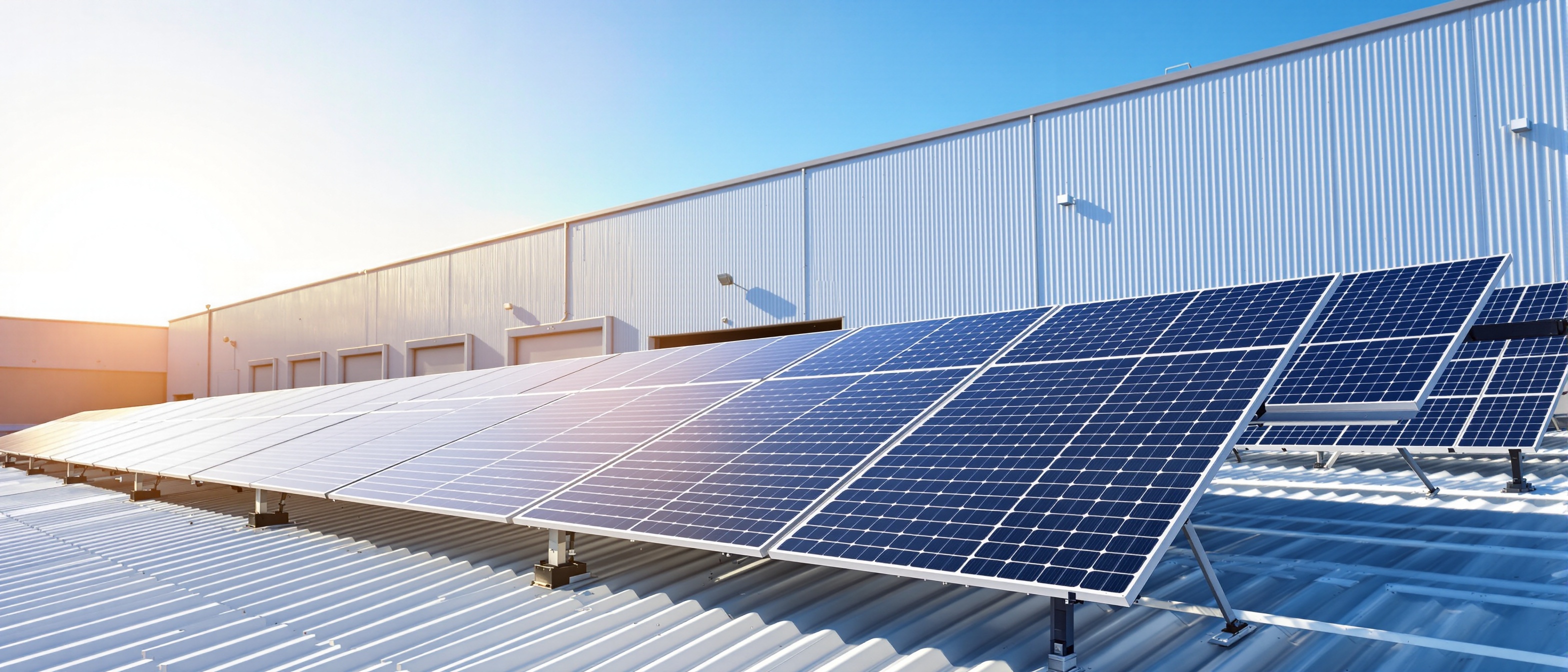
Flat roofs offer flexibility that pitched roofs do not. We can position panels at the precise tilt and orientation required to capture maximum sunlight throughout the year. With a pitched roof, you are limited by the existing angle. On a flat roof, we mount panels on ballasted frames and adjust their angle ourselves. We apply this method to warehouses in Trafford Park, office blocks near Piccadilly, and retail units towards Ancoats. For a deeper look at why warehouse roofs in particular are so well suited, see our dedicated guide to solar for warehouses.
Factory roofs across Manchester present equally strong solar opportunities, particularly for manufacturing plants with heavy daytime machinery loads that align directly with peak generation hours. For a detailed look at how we approach industrial installations, see our dedicated guide to solar for factories in Manchester.
Office buildings in Spinningfields and across Manchester's business parks are equally well placed, with peak daytime loads from HVAC, IT infrastructure, and lighting lining up almost perfectly with solar generation hours. Our dedicated guide to solar for office buildings in Manchester covers flat-roof mounting systems, DNO timelines, and the self-consumption ratios that make the financial case so strong.
Retail units across Manchester's high streets and shopping parks present equally strong solar opportunities, with long trading hours and constant refrigeration loads that align almost perfectly with daylight generation. Our dedicated guide to solar for retail stores in Manchester covers flat-roof mounting, zero-disruption installation scheduling, and the 70-85% self-consumption figures that make the payback particularly attractive for shops and showrooms.
Cold storage facilities across Manchester present another strong installation case, with 24/7 refrigeration loads and extremely high self-consumption that make payback periods particularly fast. Our dedicated guide to cold storage solar in Manchester covers structural surveys for insulated roofs, phased installation around live refrigeration operations, and how battery storage extends self-consumption into overnight hours.
School buildings across Manchester have large, flat, unshaded roofs and daytime loads that align almost perfectly with solar generation. Our dedicated guide to school solar panels in Manchester covers holiday-window installation scheduling, safeguarding protocols, and the Salix Finance routes that make zero-capex projects straightforward for maintained schools and academies.
Hospital buildings across Manchester present some of the most technically demanding installation projects we work on. NHS-grade electrical tie-ins, phased rooftop access around clinical operations, and G99 applications for large arrays all require specialist planning. Our dedicated guide to hospital solar panels in Manchester covers the full zero-disruption installation process from estates team briefing through to final commissioning.
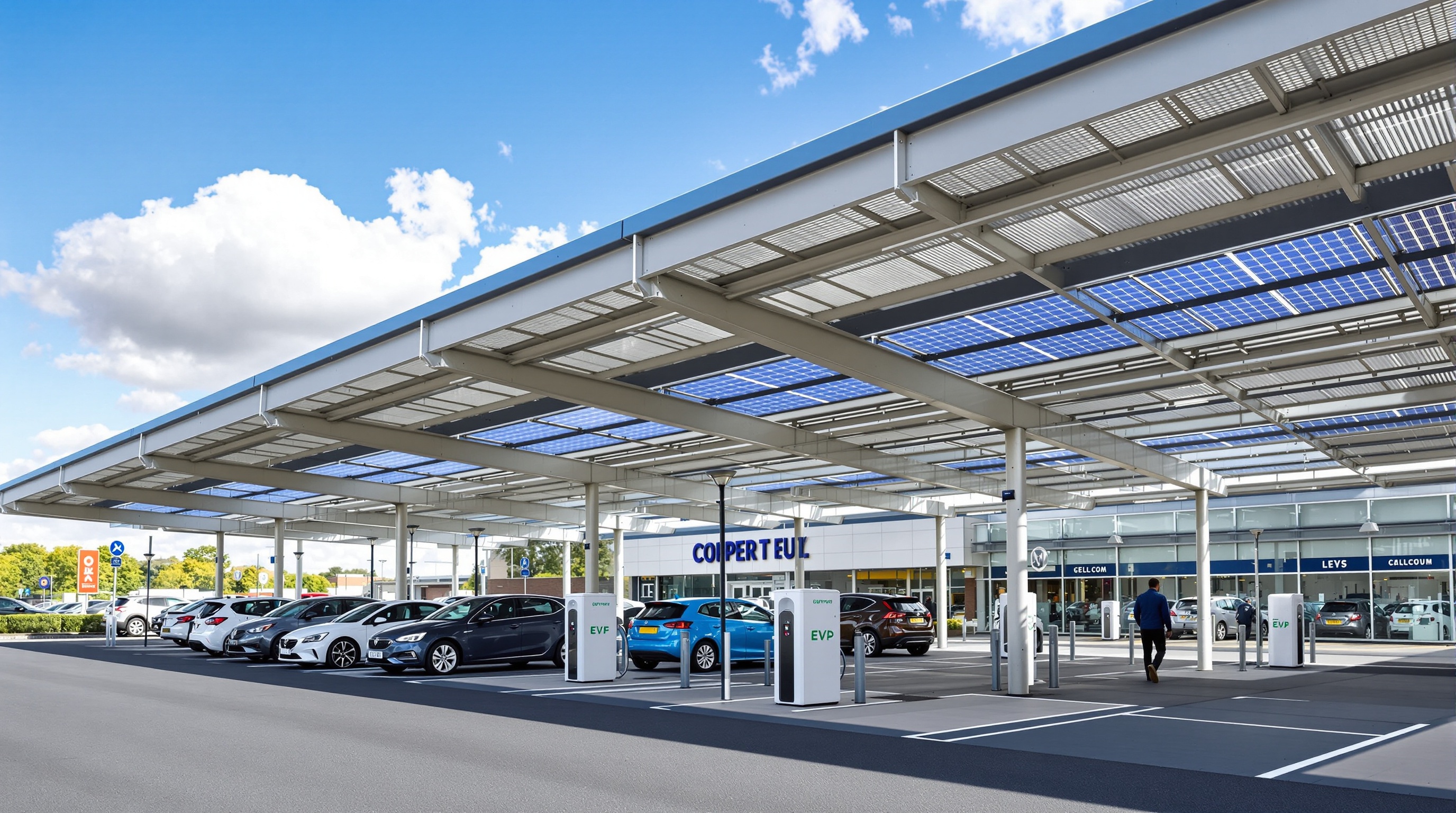
Sports stadiums and arenas across Manchester present some of the largest unobstructed roof areas in commercial property, with year-round baseload from offices and hospitality alongside intense matchday demand. Our dedicated guide to stadium solar panels in Manchester covers event-schedule-sensitive installation, floodlight peak-shaving with battery storage, and how car park canopies can add significant generation capacity.
Hotels across Manchester have large flat roofs that are well-suited to discreet solar arrays, with high daytime loads from kitchens, HVAC, and laundry running almost continuously during guest-occupied periods. Installation is planned around your occupancy calendar so guest experience is never affected. Our dedicated guide to hotel solar panels in Manchester covers the full DNO and planning process, occupancy-sensitive scheduling, and the EPC improvements that help hotels win corporate group bookings.
Here's why flat roofs work so well for commercial solar panel installation:
- Panels sit in rows with precise spacing, preventing one row from shading the next.
- Ballasted mounting systems generally avoid penetrations through the roof membrane.
- Maintenance and cleaning access remains straightforward.
- A large, uninterrupted surface area allows for bigger arrays and quicker payback periods.
There's also a planning benefit that many businesses overlook. Under the UK Government's permitted development rules, rooftop solar installations on commercial buildings under 1MW generally do not require a full planning application. This saves weeks from your project timeline. We manage the DNO application and any G99 notifications, streamlining the administrative process for you.
When we survey a flat-roofed building in Manchester, we frequently discover more usable space than the owner anticipated. A 10,000 sq ft roof can often accommodate a 100kWp system or larger. This capacity is sufficient to reduce your electricity bill. Many businesses also choose to add battery storage to capture surplus generation for use during peak hours.
We always check structural loading with great care. Flat roofs differ in construction, from concrete decks to lightweight steel with single-ply membranes. Our structural surveys confirm the roof's capacity to support the additional load before we finalise a design. On a few occasions, we have had to decline projects because the roof was unsuitable. It is always better to identify such issues early on.
However, most flat commercial roofs are well-suited for solar installations.
What the Commercial Solar Installation Process Involves
Clients often ask, 'What actually happens once we proceed?' It's a valid question. Many business owners in Manchester have not undertaken a commercial solar panel installation previously, so we'll outline the process from beginning to end.
Every project follows the same core steps, but the details change depending on your building, your roof, and your energy usage.
- Site survey and structural assessment. Our team visits your premises to assess the roof condition, measure available space, and evaluate structural loading capacity. We have surveyed warehouses near Trafford Park where the roof appeared ideal but required reinforcement. We have also encountered flat roofs in the Northern Quarter that were suitable for immediate installation.
- Solar system design. We use your energy bills and consumption data to design a system precisely matched to your actual demand. This stage also considers shading, orientation, and any future plans for the building.
- DNO application and planning checks. Most commercial installations in Manchester fall under permitted development. However, we manage the District Network Operator application in all cases. This step can take a few weeks, depending on the DNO's current workload. We provide regular updates throughout this period.
- Scaffolding and installation. Physical installation typically takes three to five days for a standard commercial roof. Larger sites or multi-building projects will take longer. We coordinate our work around your operating hours to minimise disruption to your business. For a detailed overview of how panels are physically mounted and connected during this stage, the Solar Panel Roof Installation Guide from This Old House provides a useful reference on the structural and electrical steps involved.
- Commissioning and grid connection. Once panels and inverters are installed, we test every circuit, configure your monitoring system, and complete the final DNO paperwork. Your system becomes operational and begins generating electricity from day one.
Typically, the entire process from initial survey to system switch-on takes six to eight weeks. The longest phase is usually awaiting DNO approval, not the installation itself.
Clients often find the actual installation days surprisingly straightforward. We manage all aspects, including access, scaffolding, and electrical work. Your staff can continue their normal operations. We have extensive experience with installations across offices, retail units, and industrial buildings throughout Manchester, allowing us to maintain progress without impeding your business.
To understand how this process applies to your specific building, please contact us for a detailed consultation.
Why Manchester's Climate Does Not Limit Commercial Solar Viability
A common question we receive is, 'Does solar genuinely perform in Manchester?' The simple answer is yes, and the operational data supports this.

Modern photovoltaic panels do not require intense sunshine to generate power. They respond effectively to daylight, not just direct sun. Manchester records approximately 1,200 hours of sunshine annually, according to Met Office data. This is ample irradiation to make commercial solar panel installation a sound financial decision for businesses city-wide. Panels operate more efficiently in cooler temperatures. This gives our local climate a slight efficiency advantage over hotter regions during peak summer generation.
What the Numbers Actually Show
A typical 100kWp commercial system on a warehouse roof in Trafford Park can generate between 85,000 and 95,000 kWh per year. This represents actual output from installations we have completed, not theoretical lab figures or speculative projections. Even on overcast days, panels still produce 10-25% of their rated capacity. These hours collectively contribute over a full year.
What truly matters more than sunshine hours are the following factors:
- Roof orientation and pitch angle
- Shading from nearby structures or equipment
- How much of the generated energy you consume on site
- Your current electricity tariff and annual usage pattern
When these factors are optimised, Manchester businesses routinely experience payback periods of four to six years, with some achieving this even sooner.
Independent bodies also support this view. The Solar Trade Association has consistently identified the North West as a viable region for commercial solar deployment. Installations across Ancoats, Salford Quays, and the Etihad Campus corridor demonstrate that geography is not the barrier commonly perceived.
Our extensive experience installing systems across Manchester has shown that cloud cover is seldom the primary issue; poor system design is. A meticulously designed solar system, precisely matched to your building's energy profile, consistently outperforms an oversized system on a sunnier site. This is where our solar system design process proves critical. We model your actual consumption data before any panels are installed.
Need Commercial Solar Panel Installation?
0161 570 0596Get A Free Quote. Bee Commercial Solar is ready to help.
Starting With an Energy Audit Ensures the Right System Size
We do not design a single panel layout until we have thoroughly reviewed your energy data. This approach is not a sales tactic; it prevents wasteful expenditure on a system that is either too large or too small for your building's actual energy requirements.
An energy audit provides a complete picture of your consumption. We analyse your half-hourly consumption data, observe seasonal demand shifts, and pinpoint when your business draws the most power. For example, a warehouse in Trafford Park operating cold storage overnight has a different load profile compared to an office block near Piccadilly, which typically peaks between 9 AM and 5 PM. The solar system design must reflect these differences.
During a commercial energy audit, we examine the following:
- Your current electricity bills and annual kWh consumption
- Peak demand periods and how they align with daylight hours
- Roof condition, orientation, pitch, and any shading from nearby structures
- Existing electrical infrastructure and DNO connection capacity
Frequently, business owners believe they require more panels than necessary. Alternatively, they may have received a quote for a system based solely on roof space, without considering how much of that generation will actually be used on site. This oversight can lead to inefficiencies. Whilst export tariffs offer some benefit, the most significant returns come from maximising self-consumption.
We conduct energy audits across Manchester, and the insights gained are always illuminating. For instance, one food production facility we assessed was losing nearly 18% of its electricity due to outdated lighting and HVAC inefficiency. Before we even considered panel sizing, we highlighted those losses. This led to a smaller, more cost-effective solar array, combined with straightforward efficiency improvements.
The aim is to get the system size correct from day one. This translates to faster payback and ensures your commercial solar panel installation delivers maximum value for every pound invested. Without an audit, system sizing remains an estimation.
Our team holds MCS accreditation, ensuring the audit process directly informs a compliant system design. This seamless integration eliminates any gaps between assessment and installation.
Monitoring Your System After Installation in Manchester
Once installed, your system is operational immediately. However, how can you confirm it is performing as expected? This is where solar monitoring becomes essential.

We equip every commercial solar panel installation with real-time monitoring software. This allows you to see precisely how much energy your panels are generating, hour by hour. Any dips in output are flagged immediately, eliminating guesswork. If a panel underperforms on a Tuesday morning in Ancoats, you will be alerted before lunchtime.
What Monitoring Actually Shows You
Most business owners we work with across Manchester are often surprised by the level of detail provided. The monitoring dashboard tracks several key metrics simultaneously:
- Live generation data for each string of panels
- Historical performance trends over weeks and months
- Grid export volumes and self-consumption ratios
- Fault alerts for inverters or individual panel drops
This monitoring system is more than just a display. It actively protects your return on investment. A fault that remains unnoticed for three months could result in thousands of pounds in lost generation. Such occurrences are more common than often assumed.
For Manchester specifically, cloud cover varies considerably throughout the year. Monitoring allows you to compare actual output against the expected yield for your location. This helps identify genuine system issues rather than attributing performance dips solely to weather conditions.
Our team reviews system data remotely as part of our ongoing solar monitoring service. If something appears irregular, we will contact you, often before you even notice. This could be for a simple inverter reset or a communication glitch. Occasionally, it flags a more significant issue requiring an on-site visit.
We also utilise monitoring data to inform your ongoing solar panel maintenance schedule. Panels located near industrial units in Trafford Park, for example, often require more frequent cleaning due to particulate buildup. The data indicates when output drops below the threshold that justifies a cleaning service.
To gain a deeper understanding of your system's performance, please contact us for a demonstration of the monitoring dashboard.
Effective monitoring transforms a solar installation from a one-off purchase into a long-term, manageable asset. It provides certainty about your system's operation, moving beyond merely hoping it performs to knowing that it does.
Frequently Asked Questions
Common Questions About Commercial Solar Panel Installation in Manchester
Do commercial solar installations in Manchester need planning permission?
Most commercial solar installations in Manchester do not need full planning permission. Under permitted development rules, rooftop systems under 1MW on commercial buildings are generally exempt. We handle the DNO application and any G99 notifications on your behalf. This saves you weeks compared to a full planning process. Buildings in areas with conservation designations may have additional requirements, so we check this during your initial survey.
How long does a commercial solar installation take from start to finish?
The full process from survey to switch-on typically takes six to eight weeks. The physical installation on your roof usually takes three to five days. The longest wait is normally DNO approval, not the work itself. We keep you updated throughout that waiting period. Your staff can continue working normally during installation days. We schedule access and scaffolding around your operating hours.
Will solar panels actually generate enough power in Manchester's weather?
Yes, solar works well in Manchester. Modern panels respond to daylight, not just direct sunshine. Manchester receives around 1,200 sunshine hours per year, which is enough for strong commercial returns. Cooler temperatures actually help panels run more efficiently. A 100kWp system on a typical warehouse roof can generate between 85,000 and 95,000 kWh annually. That is real output from completed local installations.
Is my commercial roof strong enough to support solar panels?
We check this on every project before finalising any design. Flat commercial roofs vary widely, from concrete decks to lightweight steel with single-ply membranes. Our structural survey confirms your roof can safely carry the added load. On rare occasions, a roof needs reinforcement or is unsuitable. We have found this on some Trafford Park warehouses. It is always better to know early, before any work begins.
What happens on the day your team arrives to install the system?
Our team arrives with scaffolding, mounting frames, panels, and cabling. We set up access without blocking your normal business operations. Panel rows are spaced carefully to avoid shading each other. Electrical connections are made to your inverter and metering setup. At the end of installation, we test every circuit and configure your monitoring system. You can watch your system generating power from day one.
Can a flat-roofed office or retail unit in Manchester support a large enough solar array to make a difference?
Yes, flat roofs are actually ideal for commercial solar. We can set panels at the exact tilt needed for maximum output, something a pitched roof does not allow. A 10,000 sq ft flat roof can often support a 100kWp system or larger. We work across office blocks near Piccadilly and retail units towards Ancoats. Larger arrays mean faster payback periods and a bigger reduction in your electricity bills.
Explore Other Services
Energy Consulting
Data-driven energy audits and strategic planning to optimise your power consumption
Learn MoreSolar Monitoring
Real-time string and inverter performance data that catches hidden output losses before they cost your business money
Learn MoreSolar Maintenance
Scheduled inspections, cleaning, and fault response to keep your commercial solar system generating at peak efficiency
Learn MoreSolar Financing
Flexible finance options to make commercial solar accessible with zero upfront cost
Learn MoreSolar Batteries
Battery storage systems that let you store excess solar and use it when you need it most
Learn MoreSolar Design Services
Expert solar system design and engineering for developers, architects, and contractors
Learn MoreEV Charger Installation
Expert EV charger installation across Manchester for homes and commercial properties
Learn MoreInverter Replacement
Expert solar panel inverter replacement across Manchester, diagnosing partial failures and silent output losses before they cost your business generation revenue
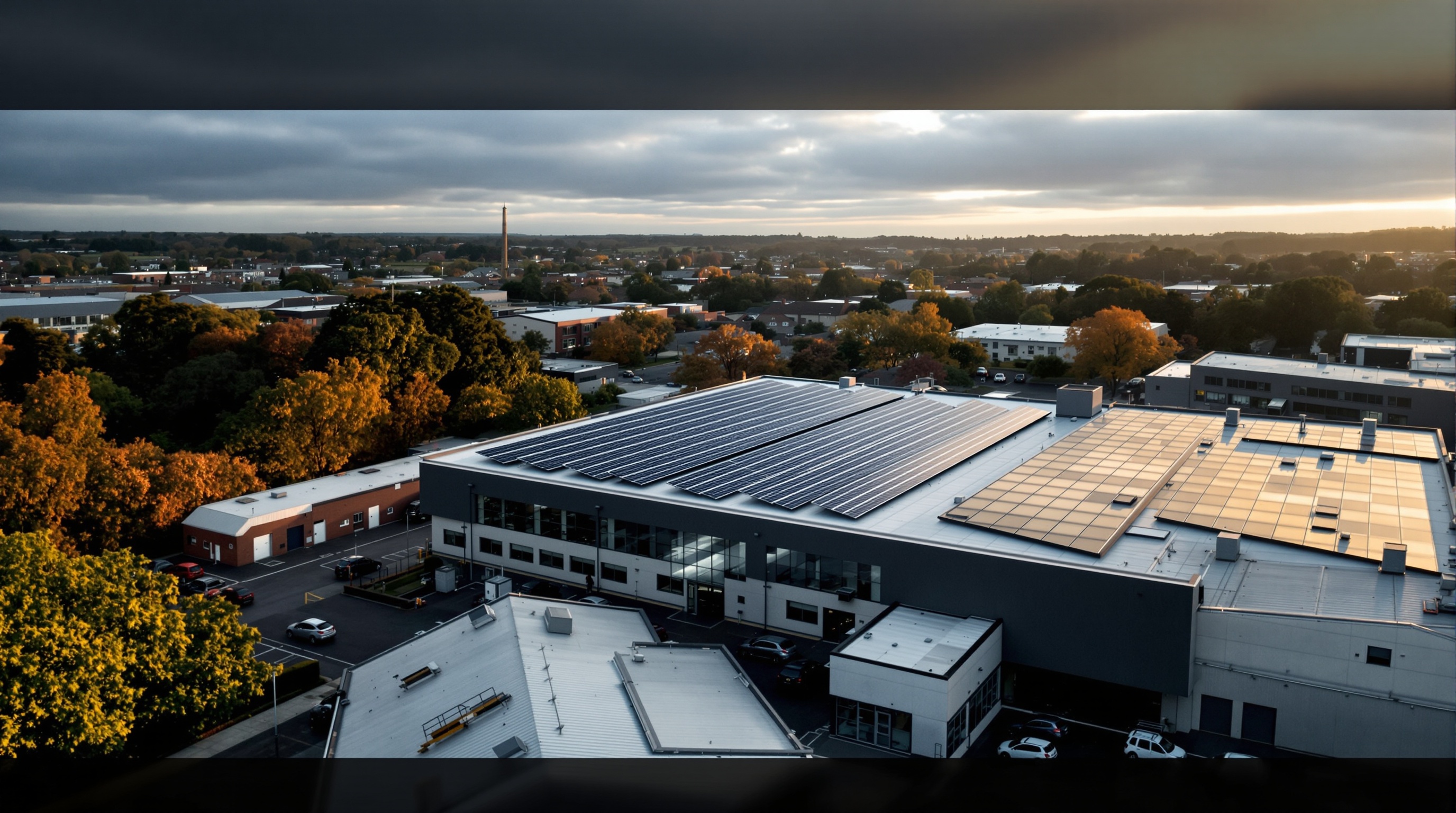
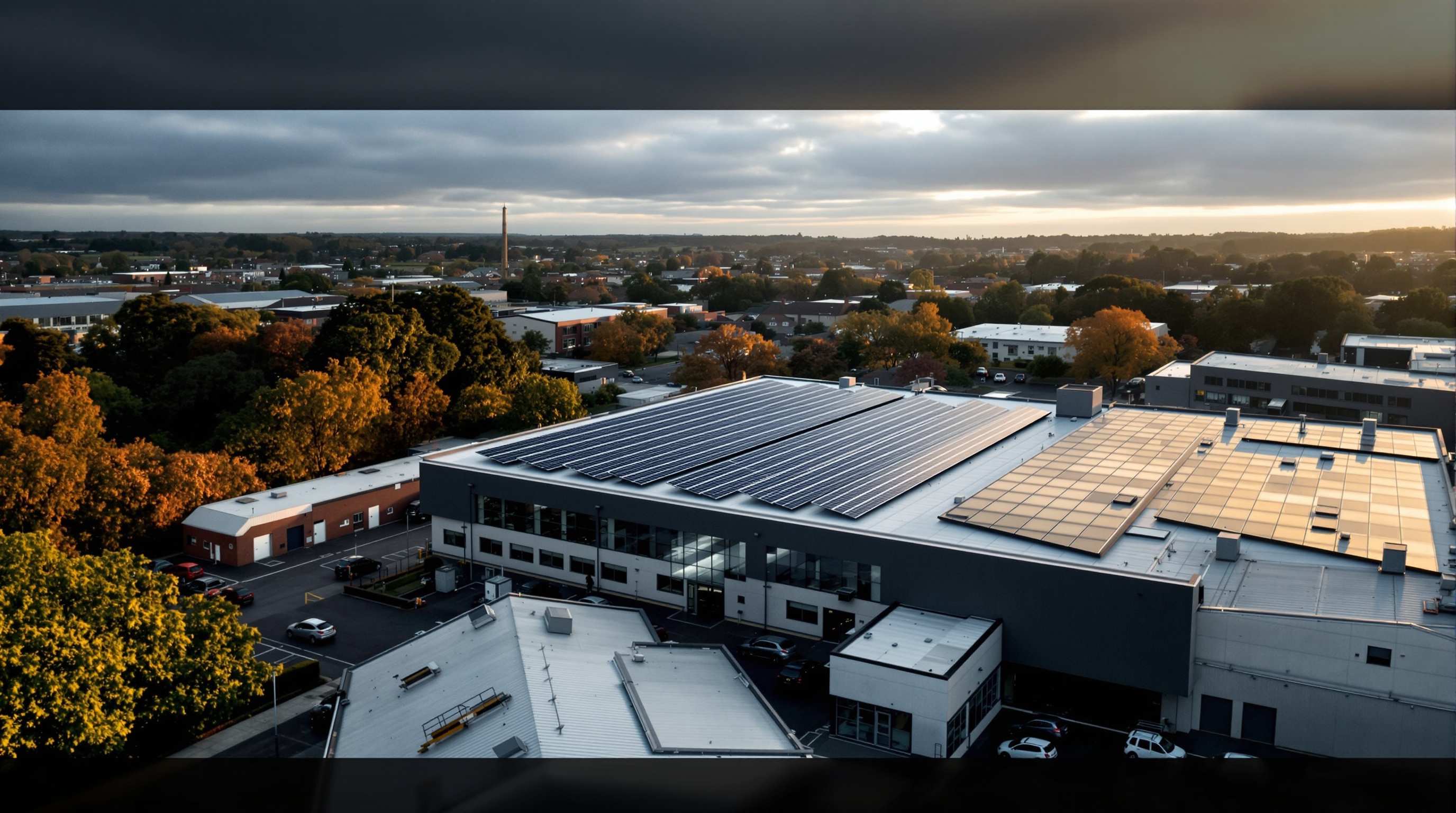
Learn MoreReal Projects, Real Results

Articles About Commercial Installation


How It Works
From first call to switch-on, we make going solar simple, transparent, and stress-free.
Free Site Survey
We visit your site, assess your roof, shading, and electrical infrastructure. No obligation, no pressure — just honest data.
1–2 hoursBespoke Design & Quote
Our engineers design a system tailored to your building, usage profile, and budget. You receive a detailed proposal with ROI projections.
3–5 daysProfessional Installation
Our MCS-certified team installs your system with minimal disruption. We handle grid connection, paperwork, and commissioning.
2–6 weeksNo obligation. We typically respond within 24 hours.
Get Your Free Solar Quote
Our engineers will visit your site for a free survey and deliver a detailed proposal within 48 hours.
No obligation. Response within 24 hours.